Introduction et Efficacité du Four à Induction
1. Introduction au Four de Fusion à Induction
Un four à induction, communément appelé four à moyenne fréquence (MF), est un système de fusion basé sur une alimentation électrique qui convertit la fréquence du réseau standard (50/60 Hz) en une plage de fréquences moyennes (généralement de 300 Hz à 10 000 Hz). Ce système utilise le principe de l'induction électromagnétique pour générer de la chaleur directement dans la charge métallique, ce qui en fait une méthode très efficace et contrôlable pour la fusion, le maintien et la surchauffe des métaux.
2. Principe de fonctionnement du four à induction
Le principe de base du four à induction est le chauffage par induction électromagnétique, régi par les effets électromagnétiques fondamentaux :
Induction électromagnétique et courants de Foucault : L'alimentation du four (onduleur) convertit d'abord l'alimentation secteur triphasée en courant continu, puis inverse ce courant continu en courant alternatif monophasé à fréquence moyenne réglable. Ce courant alternatif haute fréquence est alimenté à travers une bobine de cuivre refroidie à l'eau (la bobine d'induction), créant un champ magnétique alternatif rapide et de haute densité à l'intérieur.
Chauffage Joule (chauffage résistif) : Lorsqu'une charge métallique conductrice est placée dans cette bobine, le champ magnétique alternatif la « coupe », induisant de puissants courants de Foucault circulants à l'intérieur du métal. Lorsque ces courants circulent contre la résistance électrique du métal, ils génèrent de la chaleur directement et uniformément dans tout le volume de la charge. C'est ce qu'on appelle le chauffage Joule.
Effets électromagnétiques de soutien :
Effet de peau : Le courant a tendance à se concentrer près de la surface (« peau ») de la charge, ce qui est géré en sélectionnant la fréquence appropriée pour le matériau et la taille de la fusion.
Action d'agitation : L'interaction entre les courants induits et le champ magnétique crée des forces électromagnétiques qui agitent naturellement le métal en fusion, favorisant une excellente homogénéité de la température et de la composition.
Observation clé : La bobine d'induction elle-même reste relativement froide (grâce au refroidissement par eau), tandis que la charge métallique est chauffée à l'incandescence ou à l'état fondu rapidement et sans contact direct. La vitesse de chauffage et la température sont précisément contrôlées en ajustant le courant et la fréquence.
3. Caractéristiques et avantages de la fusion par induction à moyenne fréquence
Principales caractéristiques :
Chauffage rapide et efficace : Le chauffage interne direct entraîne des temps de fusion rapides, une efficacité de production élevée et une excellente conversion d'énergie.
Processus propre et contrôlable : Oxydation et décarburation minimales par rapport aux fours à combustible, ce qui conduit à une qualité et un rendement supérieurs du métal.
Chauffage uniforme et contrôle précis de la température : L'agitation électromagnétique assure une température constante dans tout le bain de fusion avec une grande précision de contrôle.
Excellent environnement de travail : Ne produit pas de gaz de combustion, un bruit minimal et une chaleur rayonnante plus faible, améliorant la sécurité et le confort de l'opérateur.
Avantages structurels du four (caractéristiques de conception typiques) :
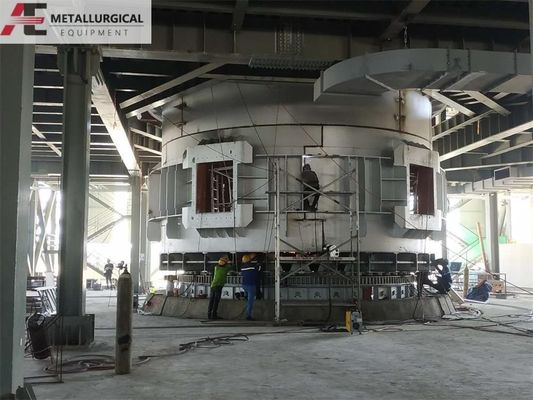
Corps de four robuste : Généralement construit à partir de tôles d'acier lourdes dans un cadre rigide de type berceau pour une durabilité accrue.
Noyaux magnétiques (concentrateurs) : Des noyaux en acier laminé profilé sont montés autour de la bobine d'induction. Ces composants essentiels concentrent le champ magnétique vers l'intérieur, vers la charge, réduisant les champs magnétiques parasites (fuite de flux), augmentant l'efficacité électrique, empêchant le chauffage des éléments en acier externes et fournissant un support mécanique à la bobine.
Conception accessible et facile à entretenir : Les bobines sont souvent accessibles pour l'entretien sans retirer les noyaux. Un couvercle de four basculant hydraulique ou à commande manuelle minimise les pertes de chaleur pendant le fonctionnement et permet l'accès à l'échantillonnage, à la mesure de la température et aux ajouts d'alliages.
Support de revêtement intégré : La coque du four comprend généralement des caractéristiques pour supporter le revêtement réfractaire et peut incorporer un mécanisme d'expulsion du revêtement pour faciliter le re-revêtement.
4. Efficacité globale
En résumé, le four à induction offre une solution de fusion supérieure caractérisée par une grande efficacité, un excellent contrôle métallurgique, une propreté opérationnelle et des capacités d'automatisation précises. Ces avantages se traduisent directement par une réduction des coûts d'exploitation (consommation d'énergie plus faible, moins de perte de métal), une amélioration de la qualité des produits et un environnement de fonderie ou de production de métaux plus sûr et plus durable.
Nous sommes un fabricant professionnel de fours électriques. Pour toute demande de renseignements, ou si vous avez besoin de fours à arc submergé, de fours à arc électrique, de fours de raffinage en poche ou d'autres équipements de fusion, n'hésitez pas à nous contacter à susan@aeaxa.com


 Votre message doit contenir entre 20 et 3 000 caractères!